 , fast delivery, and backed by our world-class customer service every step of the way.
 Back
Back

Looking Forward: Augmented Reality, the Return of QR Codes and Smart Packaging Design
Augmented reality is changing the way we interact with product packaging. The technology lets consumers see beyond the box by giving them greater insight into product info and brand identity. It creates a more personalized shopping experience, one that blurs the line between e-commerce and brick-and-mortar retailing.
Certainly, the technology has its detractors. Over the years, it’s been dismissed by some as a passing gimmick. The criticism isn’t totally unfounded—while AR has been around for nearly a decade, it’s still yet to become commonplace in the average North American shopping experience. Nevertheless, while AR may be taking a bit longer than anticipated to be adopted (technological hurdles have led to some awkward applications), it’s hard to ignore the current trends poising AR as the next big thing in retail. Forbes notes how “Projects with the terms ‘augmented reality’ or ‘virtual reality’ are up 38 percent compared to 2015 (and up by 514 percent since 2013).” And with major retailers such as IKEA and Walmart already on board, we’d be remiss not to explore some of the ways in which printed packaging might be affected by AR.
QR Codes: The Second Coming
The growing interest in AR brings with it a renaissance of those pesky codes that clutter your packaging design. It wasn’t too long ago when QR codes seemed like a dying fad that had been overused by brands without much rhyme or reason. But with technological strides such as Apple’s active scanner on iPhone cameras, QR codes are back in a big way. Like it or not, they’re packaging elements your brand will need to consider in the very near future.
Before delving into how these codes might be used effectively, it’s worth stepping back and looking at them from a design perspective. Let’s be honest, QR codes aren’t the most aesthetically pleasing elements. Their presence can be clunky and intrusive. Of course, dig deep enough and you can find some artful exceptions.
But not so fast. Unless you’re on the other side of the Pacific, examples like this one are few and far between. In China, the QR phenomenon has already exploded, which means brands have far more freedom to experiment with artful applications.
Admittedly, it’s not as pretty. Nevertheless, Amazon is savvy enough to take ownership of the technology. It’s not a QR code; it’s a SmileCode—the company’s branded grin takes center stage. Is it an ideal application of the technology? No, but it’s where we are at the moment. Amazon still needs to reserve ad real estate for explaining what the code does and how to use it.
As AR blossoms, brands will increasingly be re-evaluating folding box packaging space. How integrated into the design should a QR code be? Will instructions be featured directly on the packaging or will other marketing material cover the how-tos? But perhaps the most important design question we should ask ourselves is what function the QR code serves in the first place. After all, function often paves the way for form.
Organic and allergen-friendly snack bar ZEGO hits the design nail on the head with its QR-centric packaging. The code’s functionis to provide in-depth food allergy information about the scanned ZEGO product. This info is extremely valuable to potential ZEGO customers who may suffer from gluten intolerance or severe nut allergies. With ZEGO, the code isn’t just some “bonus feature” but rather, an essential part of the product’s DNA; therefore, the most appropriate way to feature the code is as a part of the food product itself. Here, the spotted design takes the shape of sunflower seeds.
How your brand chooses to showcase its QR code should depend heavily on how your product intends to use augmented reality. As we see in the case of ZEGO, AR technology, brand identity and packaging design can exist harmoniously after all.
Now that you have some inspiration, we encourage you to play around with our custom box builder.
Explore how a QR code might integrate into your custom mailing box design. In fact, we’d love to see what you come up with! Feel free to send us your mock-ups. If we get enough feedback, we’ll write a follow-up post showcasing some of your examples.
What’s Next?
Beyond QR codes, augmented reality will mark a seismic shift in how we approach package printing design. You’ve probably seen big brands leverage the technology to create an additional visual layer. Bombay Sapphire, for example, lets its packaging come alive by dressing the bottle with a small tag.
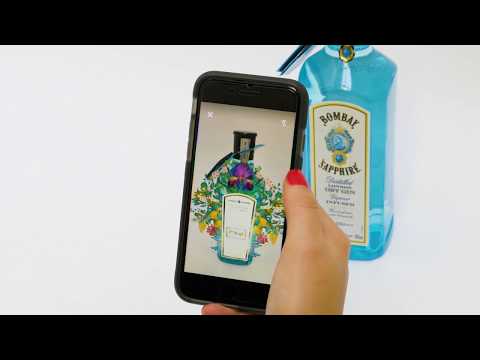
The amount of additional content and design AR provides us with is staggering. Indeed, Bombay doesn’t need to do much to its highly recognizable printed packaging; rather, it builds upon it with a colorful, interactive digital layer. That being said, new brands emerging in tandem with the technology will need to consider which branding/product features belong on packaging and which should exist in the digital realm. To truly unlock AR’s full potential, we mustn’t simply approach the technology as something “in addition to” packaging design; rather, we must see it as an integral part of our broader packaging strategy. Custom shipping box manufacturers working at this frontier will offer insight in creating fluid designs to serve both purposes simultaneously.
Zappar, the augmented reality platform that developed Bombay’s campaign, provides up with a great example of how AR and packaging design might soon become so intertwined that they’ll be practically indistinguishable from one another.

W-in-a-Box cleverly engineers its packaging as the preface to a larger story. The pronounced W comes to life when the application is activated. We see that “W” not only connotes “Water” but also “Why”. The W becomes a symbol of curiosity that guides us through the brand’s story. What’s more, the package’s minimalist, black-and-white design receives more and more splashes of color as we delve deeper into the journey. There’s a conversation happening between the printed water carton design and our smartphone. Together, they produce a packaging experience.
A New Conversation for a New Audience
AR has practical applications that could very well broaden a brand’s demographic. Consider how the technology has the power to eliminate language barriers or be leveraged to give more purchasing power to people with disabilities. Not to mention, adopting AR and smart packaging will go a long way in attracting a younger clientele.
And with these new target audiences comes new design considerations. All this to say, with the emergence of AR, brands need to ready for a new packaging frontier—one that demands significant experimentation. Packwire, and package printing companies like it, anticipate this industry shift. We’re a rigid box manufacturer that’s offering quicker turnaround and fulfilling smaller orders, which gives new businesses the opportunity to adapt and reshape. Let’s get creative!
