 , fast delivery, and backed by our world-class customer service every step of the way.
 Back
Back

Words on the Box: Copywriting and Packaging Design
We’ve spent a lot of time musing over the many facets of packaging. We’ve tackled printing, branding, unboxing videos—heck, we even wrote an article about blockchain and its potential effect on the packaging industry. Looking at each option, from Packwire’s rigid boxes, to custom mailer packaging, printed shipping boxes, and other high quality folding boxes, the functionality and aesthetics have been thoroughly put forward. We’ve used a whole lot of words to cover a whole lot of subjects. But oddly enough, none of these words have yet to tackle one the most important facets of good packaging: the words themselves.
Truly, copywriters are the unsung heroes of winning packaging designs. Sitting on the shelf next to a slew of competitors, your product needs to call out to consumers. Colors, sexy fonts and even the shape of your packaging may beckon them. But once your product’s in their hands, they want the assurance that they’re making the right choice. Words matter. And it’s not always about flowery prose or witty attention grabbers. There’s a science to good packaging copy. Let’s delve into some of the nuts and bolts, shall we?
The Shape of Things—What Goes Where?
For simplicity’s sake, let’s start with a box. You’ve got six sides to get your message across. Rule of thumb is that you want your front-of-the-box copy to get straight to the point. Here is not the place for editorial. You’ll want to use the front panel to showcase your key differentiators. What sets your band apart? Sometimes the message is explicit. Health food products, for instance, will make claims of “all natural” and “organic” here.
Other times, the differentiator will be more about tone and personality. Take Anatomicals body products—the front panel of its daily moisturizer packaging doesn’t make any serious claims. Instead, it uses the facade to showcase its character.

The only claim it makes is that it doesn’t take itself too seriously. It uses humor to distinguish itself from the self-seriousness of its neighboring body products.
Good front-panel copy articulates everything the consumer needs to know about the brand in less than a sentence. But what’s important to remember is that your packaging can be picked up and shifted around in any old direction. Each panel on your packaging must convey its own message but at the same time address the reader as though this one side is the only side they’ll ever look at.
Sahaja Life hair dye recognizes this important fact. Sure, the copy’s minimalist (its front panel simply makes the “100% natural” and “chemical free” claims) but the back of the box cleverly forgoes overwrought brand promises and instead clearly lists what’s inside. You know exactly what you’re getting no matter how you hold the product.
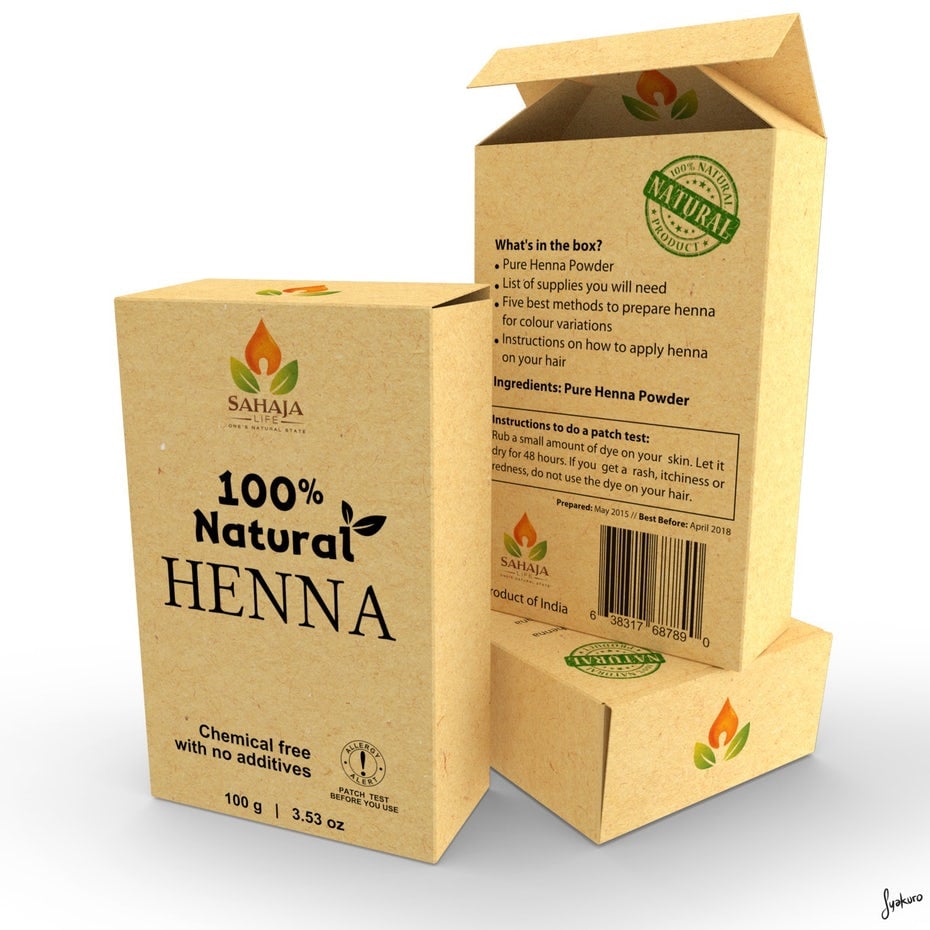
The eye always scans for lists. Sahaja Life’s bold “What’s in the box?” header grabs your attention. As you keep reading, you see that apart from the “Pure henna powder” and helpful “List of supplies” you also receive “Five best methods to prepare henna for color variations” (this last one reads like a headline). This packaging copy promises both a “natural” product and informative content inside the box.
Which leads us to our next point: packaging design isn’t always just about what’s on the box. Often, it’s also about what’s below the surface. Packaging has layers and each one tells a story. The outer crust is where you include direct sales or point of purchase copy. But once the packaging is open, it’s safe to say you’ve already made the sale. What’s next? Maybe your messaging should include a powerful call to action for social media engagement. Or perhaps you can use this opportunity to thank the consumer for choosing your brand among all the others. All this to say, copywriting for packaging is unique in that it's never as linear as landing page or sales brochure copy. Effective messaging must always account for your packaging’s many sides.
Person-to-Person: Talk to Them
Packaging copy serves a multitude of services. There is legal jargon that needs to be accounted for, instructions, promotional messages…but above all, good packaging copywriting needs to evoke an emotional response. Admittedly, this statement is a bit of a given—every facet of good packaging should excite us, tug on the heartstrings or tickle the funny bones—but copywriting is somewhat different from other packaging elements; unlike color schemes or logo designs, copy addresses the consumer in a language you know they’ll understand. You spell it out for them.
Effective packaging speaks to consumers directly. To get what we’re driving at, just take a look at Charlie’s Quenchers, a beverage company from New Zealand. Charlie’s knows that its potential buyers always glean the back of its bottle for nutritional information, which is why they use this panel to include a special message for the thirsty consumer.
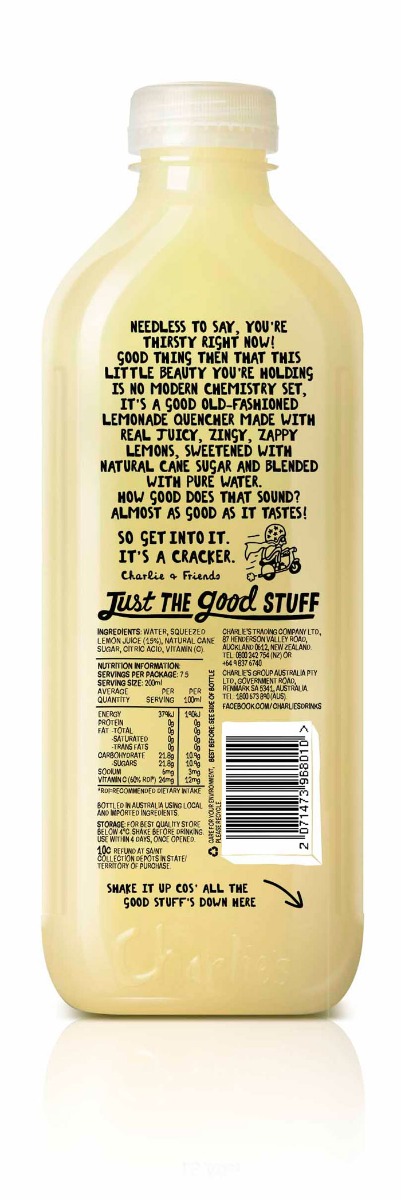
“Needless to say, you’re thirsty right now.”
There’s no our or we in this opening line; the conversation begins with you. Dale Carnegie put it best: “Talk to someone about themselves and they’ll listen for hours.” It’s a simple trick but an incredibly impactful one.
The playful tone persists for another 50 words or so. It opts for colloquialisms like “just the good stuff” instead of marketing speak like “all natural”. Charlie’s speaks to you like a person, not a brand. Putting a bottle of Charlie’s down after reading that opening blurb feels like walking away from a friendly conversation.
Words Where You Didn’t Think You’d Need Them
Let’s step away from the shopping aisle for a moment. When we talk about packaging, we too often think retail. But today, with so many packaging printers offering easier ways to get your messaging on a box, businesses are turning to packaging to help reinforce their brand. Companies such as Packwire make printing folding boxes and mailing boxes as easy as printing flyers and brochures. As a result, businesses we wouldn’t normally associate with the packaging world are now turning to these easy printing methods to get their messaging out there.
So, what’s all this got to do with copywriting? Consider again Charlie’s Quenchers and how it talks to consumers, in the here and now, as the product rests in their hands. Good copy, when paired with the tactile experience of holding a consumable product, resonates much more than something being read off a glossy 8.5x11.
Nowadays, packaging copywriting is popping up in places you wouldn’t necessarily expect to find it. It’s helping to transform often overlooked details into little gems that get people talking. Even something as banal as hotel soap is getting the agency treatment.

This little darling can be found in the hotel bathrooms of Chic&Basic, a boutique hotel brand in Barcelona and Amsterdam. The hotel’s visual identity is the brainchild of Barcelona-based brand agency Espluga + Associates. When it came time to conceive of the chain’s visual identity, the agency wanted to let the hotel’s stunning architecture speak for itself. They note in their case study: “With no visual fireworks, language is the identity’s main element.”
The identity experts wanted to ensure that the hotel’s laissez-faire attitude would be a part of every tactile guest experience. What’s fun about this exercise is that we see packaging copywriting serving a different function than it does in retail. There’s no need for direct marketing copy once the guest has already checked in. These words are all about enforcing brand identity.
Espluga + Associates highlights a unique relationship many of us have with soap. It’s a relationship that has nothing to do with what the amenity does for our skin. There’s no talk of craftsmanship or moisturizing benefits; rather, it calls you out for contemplating petty theft. It’s personal. More than that, it’s intimate. It’s a little joke shared by just you and the unassuming package.
Even if your business doesn’t directly deal with packaging printing, it’s worth at least considering how you might incorporate packaged items to serve as pint-sized billboards that give your brand a boost. Tactile massaging is an incredibly powerful marketing tool.
Postscript
Empathy, clarity, spatial awareness—these are the three main ingredients to effective packaging copywriting. Of course, rules (particularly those in the world of packaging design) are meant to be broken, so consider the guidelines but always be eager to find a path all your own. Technologies such as augmented reality are drastically changing the ways consumers are interacting with packaging and, in turn, the words on the box. As technologies change, so, too, do the stories we tell.