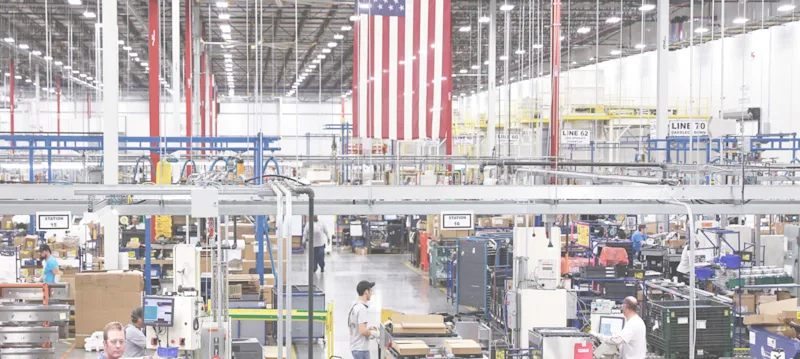
 , fast delivery, and backed by our world-class customer service every step of the way.
 Back
Back

Digital vs. Flexo Printing: Which Method Works Best for Your Brand?
The printing method behind your packaging can be the difference between a nimble, responsive brand and one locked into outdated inventory. As the packaging industry evolves, the debate between digital and flexographic printing has shifted from simple quality comparisons to strategic business decisions that impact everything from cash flow to customer satisfaction.
For decades, flexographic printing dominated the packaging world with its efficiency at scale. But as brands demand more flexibility, faster turnarounds, and the ability to test and iterate, digital printing has emerged as more than an alternative—it's become the enabler of modern packaging strategies.
While both printing methods have their place in today's market, digital printing has fundamentally changed how brands approach packaging. No longer do companies need to commit to thousands of boxes to get professional, high-quality packaging. With minimums as low as 10 units and the ability to produce multiple SKUs in a single run, digital printing enables the kind of agility that modern markets demand.
Understanding the Fundamentals
How Digital Printing Works
Digital printing uses direct-to-substrate technology that transfers your design directly onto the packaging material without the need for printing plates. Think of it as the evolution of printing—your artwork goes straight from the digital file to the final product through sophisticated color management systems and RIP (Raster Image Processing) software.
At Packwire, we utilize both single-pass and multi-pass digital printing systems, intelligently routing orders based on size and specifications. Single-pass systems excel at larger format and higher volume digital runs, moving the substrate through the press once at high speed, making them incredibly efficient for bigger boxes or when you need hundreds of units quickly. Multi-pass systems offer maximum flexibility for smaller, more complex jobs, allowing us to handle virtually any size or configuration you need.
This dual-system approach means you're not locked into one production method. Your 10-unit test run and your 1,000-unit reorder both get the optimal production path, ensuring quality and efficiency regardless of order size.
How Flexo Printing Works
Flexographic printing relies on flexible photopolymer plates wrapped around rotating cylinders. Each color in your design requires its own plate, and these plates must be precisely aligned (registered) to create the final image. The process has been refined over decades and operates like a well-oiled machine—literally.
The setup process involves creating plates through a photochemical process, mounting them on the press cylinders, and carefully calibrating the registration and ink flow. Once running, flexo presses can produce thousands of impressions per hour with remarkable consistency.
It's a proven technology that has served the packaging industry well, particularly when production runs reach into the tens of thousands. But that efficiency comes with upfront commitments that don't always align with modern business needs.
The Digital Advantage: Agility in Action
Minimum Order Quantities That Make Sense
The most transformative aspect of digital printing isn't just the technology—it's what it enables. At Packwire, our 10-unit minimum order quantity for Mailer Boxes (FEFCO 0427) and Shipping Boxes (RSCs) completely changes the packaging equation.
Consider what this means for your brand: You can test a new product with just 10 boxes. Launch a limited edition without warehouse commitments. Try three different designs and see which resonates with customers. Create seasonal packaging without leftover inventory haunting your warehouse come January.
This isn't about thinking small—it's about starting smart. Every successful product started with a first order. Digital printing ensures that first order doesn't have to be 5,000 units gathering dust if the market responds differently than expected. With our 3D configurator, you can visualize exactly what your boxes will look like before ordering, reducing risk even further.
Digital CAD Cutting: Any Size, Any Time
Traditional flexo printing requires dies—custom-made cutting tools that define your box's shape and size. Each die costs hundreds to thousands of dollars and needs physical storage. Change your product dimensions? New die. Want to test a different box style? New die.
Digital CAD cutting eliminates this entirely. Using precise computer-controlled cutting, we can produce any size or structure without tooling costs. This means you can adjust your packaging dimensions based on actual customer feedback, not projected guesses. If your product needs 0.5" more headroom or customers prefer a narrower profile, you can make that change on your next order without penalty.
More importantly, you can run multiple SKUs in the same production batch. Need three sizes for your product line? No problem. Want to test two different structural designs? Done. This flexibility extends beyond just convenience—it's about being able to respond to market feedback in real-time.
Speed to Market
In the digital world, the distance between idea and execution continues to shrink. Our 10-20 day turnaround isn't just about production efficiency—it's about enabling modern business cycles. When you can go from design approval to delivered boxes in under three weeks, you can:
- Launch products while trends are still trending
- Respond to competitive pressures immediately
- Test packaging for holiday seasons without year-long commitments
- Iterate based on actual customer feedback, not focus groups
Being US-made amplifies this advantage. There's no overseas shipping, no customs delays, no wondering if your packaging is sitting in a container ship. Your boxes are produced domestically with oversight and quality control at every step. This aligns perfectly with sustainable packaging practices that modern consumers expect.
Technical Deep Dive: Print Quality Considerations
Digital's Technical Evolution
Modern digital printing has evolved far beyond its early limitations. Today's direct-to-substrate digital technology delivers HD quality that rivals or often exceeds HD flexo printing. The consistency is remarkable—the first box looks identical to the last box, with no warm-up waste or color drift throughout the run.
Our 6-color digital press represents a significant advancement in color reproduction. While traditional CMYK printing uses four colors, our expanded gamut adds orange and violet to the mix. This means we can hit most Pantone (PMS) colors directly—addressing what was historically flexo's strongest advantage. Your brand colors remain consistent whether you're printing 10 boxes or 1,000.
The gradient handling in digital printing particularly shines where flexo struggles. Smooth transitions, photographic images, and complex patterns reproduce beautifully without the banding or screening issues that can plague plate-based printing. This opens up design possibilities that were previously cost-prohibitive or technically challenging, perfect for creating memorable unboxing experiences.
Where Flexo Maintains Advantages
Flexographic printing still excels in specific scenarios. When you need specialized coatings that require specific application methods, flexo's mechanical process provides options that digital is still developing. For extremely long runs—think 50,000+ units—flexo's per-unit economics can be compelling.
Certain substrates and specialty materials may also favor flexo's ink application method. If you're printing on unusual materials or need specific food-safe certifications that require particular ink systems, flexo's longer history means more options are available.
The key is understanding these are edge cases for most brands. Unless you're ordering tens of thousands of units with specialized requirements, digital printing offers comparable or superior quality with dramatically more flexibility.
The Business Case: ROI and Risk Management
Real Costs vs. Perceived Savings
The per-unit cost conversation often dominates printing decisions, but it's incomplete. Let's talk total project investment. Flexo requires:
- Plate costs: $500-1,500 per color (4-6 colors typical)
- Die cutting tools: $800-2,500 depending on complexity
- Setup fees: $300-1,000 per run
- Minimum runs: Usually 5,000+ units to justify setup
Before printing a single box, you're investing $3,000-8,000 just in tooling and setup. Add the cost of 5,000 boxes you may not need, and the "savings" of a lower per-unit cost evaporate quickly.
Digital printing eliminates these upfront costs entirely. No plates, no dies, no massive minimums. You invest only in the packaging you need, when you need it. This isn't just about saving money—it's about deploying capital intelligently.
Cash Flow and Inventory Intelligence
Consider the cash flow implications. With traditional flexo runs, you're tying up capital in inventory that might take months to consume. That's money that could be used for marketing, product development, or scaling other parts of your business.
Digital printing's low MOQs enable just-in-time packaging strategies. Order what you need for the next 30-60 days. Use customer response to guide your next order. If sales exceed expectations, reorder quickly. If they don't, you're not stuck with obsolete inventory.
This approach also reduces storage costs, prevents packaging from becoming damaged or dated, and ensures you can update packaging with improvements or regulatory changes without waste.
Multiple SKUs: The Hidden Superpower
While we don't offer per-box customization, our ability to efficiently produce multiple SKUs in a single production run is a game-changer for brands with diverse product lines. Traditional printing would require separate setups, plates, and runs for each variation. With digital, we can seamlessly transition between designs.
This capability enables:
- Complete product line packaging without massive combined MOQs
- A/B testing of different designs in market
- Regional variations for different markets
- Size variations for different retail channels
- Seasonal designs without year-long commitments
For subscription box companies, e-commerce brands with multiple products, or any business with a diverse SKU count, this flexibility transforms packaging from a constraint into a competitive advantage.
Future-Proofing Your Packaging Strategy
The pace of change in retail and e-commerce continues to accelerate. Consumer preferences shift quickly, regulations evolve, and sustainability requirements become more stringent. Digital printing positions your packaging strategy to adapt rather than react.
Consider regulatory compliance. When ingredient lists change, warnings are required, or sustainability certifications are earned, digital printing allows immediate updates. There's no agonizing over whether to waste existing inventory or delay compliance. Simply update the file for your next order.
Seasonal adaptations become profitable rather than problematic. Halloween designs don't haunt your warehouse in November. Holiday packaging doesn't require February ordering decisions. You can respond to market opportunities as they arise, not as you predicted them months ago.
Perhaps most importantly, digital printing enables iterative improvement. Your packaging can evolve with customer feedback, incorporating QR codes for engagement, updating graphics based on social media response, or adjusting sizing based on shipping data. Each order represents an opportunity to improve, not a commitment to repeat past decisions.
This flexibility extends to sustainability improvements as well. As new eco-friendly materials become available or recycling guidelines change, you can adapt immediately. Your packaging becomes a living element of your brand rather than a static asset.
Common Misconceptions About Digital Printing
Despite digital printing's advances, outdated perceptions persist. Let's address the most common misconceptions:
"Digital can't match our brand colors" – With our 6-color expanded gamut press, we achieve most PMS color matches. The addition of orange and violet to standard CMYK dramatically expands the achievable color space. Unless you need a very specific fluorescent, digital handles brand colors beautifully.
"Digital isn't durable enough for shipping" – Modern digital inks are formulated specifically for packaging applications. They resist scuffing, moisture, and UV exposure just like flexo inks. Combined with appropriate coatings and treatments, digitally printed boxes are every bit as durable as their flexo counterparts.
"Digital is only cost-effective for small runs" – While digital shines at lower quantities, modern single-pass systems have changed the economics. Depending on design complexity and color requirements, digital remains competitive up to several thousand units. When you factor in the eliminated costs of plates, dies, and obsolete inventory, the break-even point is higher than most assume.
"Digital printing looks different from flexo" – In blind tests, most customers can't distinguish between high-quality digital and flexo printing. The HD quality of modern digital systems, combined with advanced color management, produces results that meet or exceed flexo quality for most applications.
"We need flexo for inside printing" – Digital handles inside printing beautifully, often with more flexibility than flexo. Whether you want a subtle pattern, bold branding, or detailed instructions inside your box, digital delivers without additional setup costs.
Quality Control Advantages
Digital printing's quality control advantages extend beyond just consistency. The digital workflow provides unprecedented visibility and control throughout production.
Color accuracy begins with digital proofing that exactly matches final output. Unlike flexo, where proofs are approximations, digital proofs show precisely what your boxes will look like. This eliminates surprises and reduces revision cycles.
During production, inline monitoring ensures consistent quality throughout the run. There's no warm-up period where colors stabilize, no mechanical variations as plates wear. The 100th box matches the 10th box matches the 1,000th box.
Our US-based production adds another layer of quality assurance. Your packaging is produced under strict quality standards with real-time oversight. If questions arise, they're addressed immediately, not through time-delayed overseas communication. This domestic production also means faster resolution of any issues and the ability to implement special requirements or last-minute changes when needed.
The digital workflow also creates perfect reproducibility. When you reorder, your packaging will match exactly—no variations from new plates, different operators, or changed press conditions. Your brand consistency is guaranteed across orders, seasons, and years.
Making the Strategic Choice
The choice between digital and flexo printing ultimately depends on your brand's specific needs and strategy. Flexo still makes sense for:
- Established products with proven demand exceeding 10,000 units
- Single or two-color designs where plate costs are minimal
- Specialized applications requiring specific coatings
- Situations where the absolute lowest per-unit cost outweighs all other factors
But for the vast majority of modern brands, digital printing offers compelling advantages:
- Start with just 10 units to test the market
- Iterate designs based on real customer feedback
- Manage cash flow intelligently without inventory investment
- Respond to market changes in weeks, not months
- Maintain quality that rivals or exceeds traditional printing
- Scale gradually as demand proves itself
The Future is Flexible
The packaging industry's shift toward digital printing reflects broader changes in how businesses operate. Markets move faster, consumer preferences shift quickly, and the ability to adapt determines success. Digital printing isn't just a production method—it's an enabler of modern business models.
At Packwire, we've built our entire platform around digital printing's advantages. From our 10-unit minimums to our intuitive online design tool, every decision supports brand agility. Our 6-color press ensures your colors pop, our US-based production ensures reliability, and our digital CAD cutting ensures you're never locked into yesterday's decisions. But most importantly, we've made the entire process remarkably simple—from uploading your artwork to receiving your finished boxes, we handle the complexity so you can focus on growing your brand.
Digital and flexo printing each serve important roles in the packaging ecosystem. The key is choosing the method that aligns with your current business needs. In a world where speed, adaptability, and smart capital deployment determine success, digital printing provides the perfect foundation for brands that need to stay agile, test new ideas, and grow strategically.
Ready to experience the difference? Start with 10 boxes. Test your market. Gather feedback. Iterate and improve. Scale with confidence. That's the power of digital printing—turning packaging from a constraint into a catalyst for growth.
Ready to make your packaging as agile as your brand? Create your custom boxes at Packwire.com with just 10 units minimum. Design online, approve digitally, and receive professionally printed packaging in 10-20 days—all manufactured in the USA.