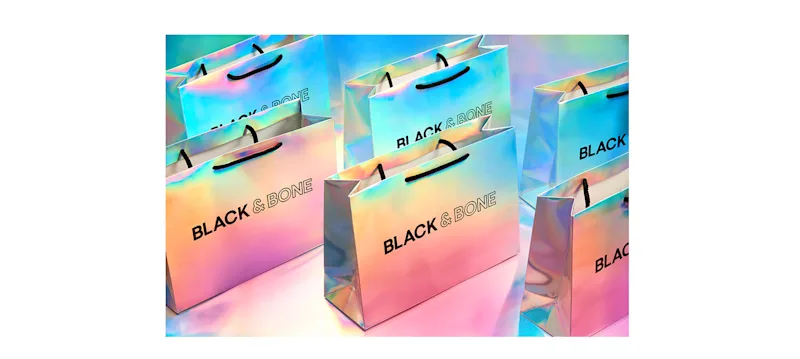
 , fast delivery, and backed by our world-class customer service every step of the way.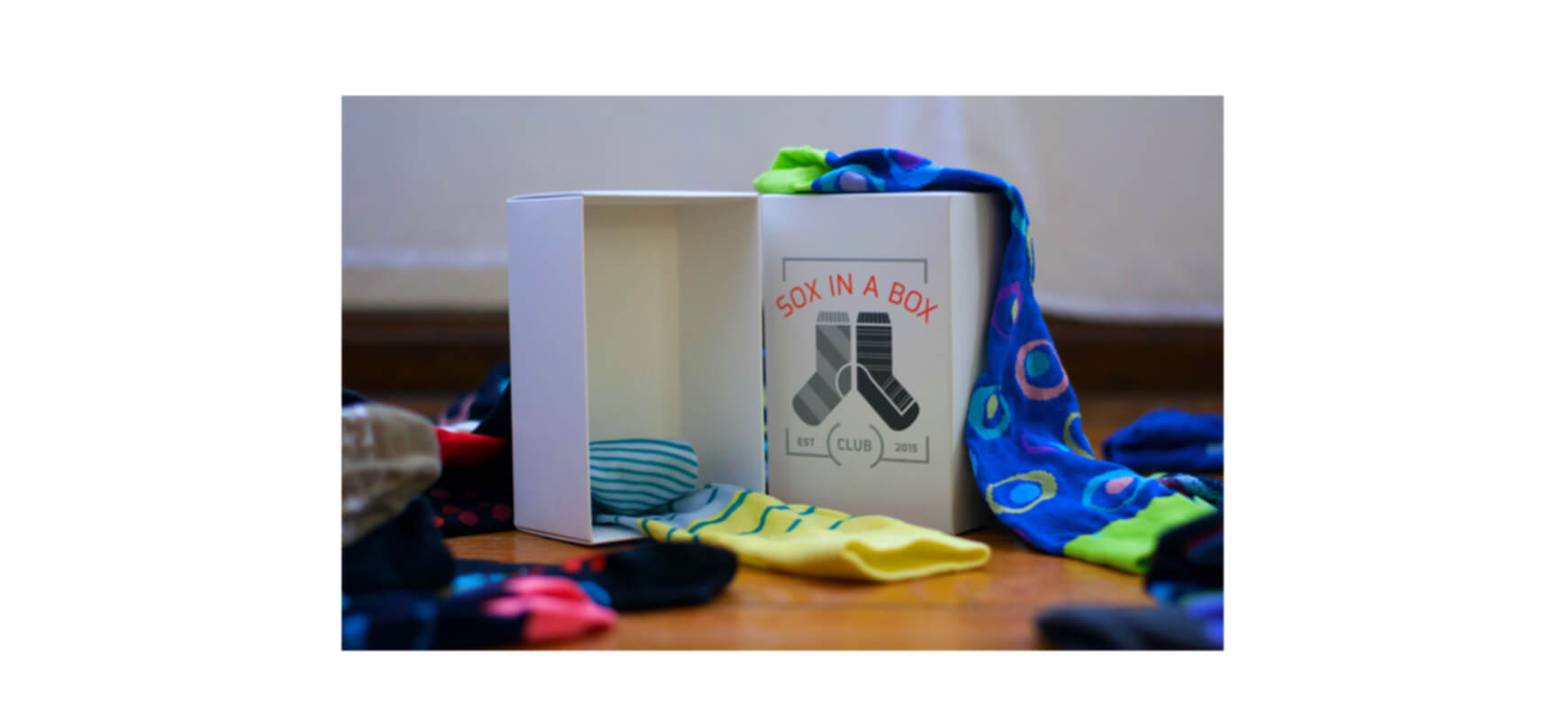
 Back
Back

Custom Branded Packaging in eCommerce
Fifty milliseconds: that’s how long it takes someone to formulate an opinion about your brand. The Google study that published these results emphasizes how crucial first impressions are. And in the world of ecommerce, where touch points are more limited than physical retail, first impressions are essentially all you have.
Not to be overlooked when gauging the power of positive impressions is custom ecommerce packaging. Arguably, packaging is the most crucial branding element to an ecommerce business’s survival. It promotes recurring clientele, it facilitates the all-important unboxing experience and, perhaps most importantly, it can transform your product into a lifestyle—and as we’ll later discover, a lifestyle is what today’s ecommerce clientele is really buying.
None of this is to say that what’s inside the box is an afterthought to how you dress it up. Rather, the question becomes how customizing your packaging design can better communicate your business’s strongest selling points and differentiation. After all, it’s the packaging that creates the first tactile impression with your customers. What do you want this impression to be? Is your packaging simply a box that carries your product from point A to point B or does it give your brand additional value?
Why does it matter if it’s already been purchased?
The consumer has dripped down your sales funnel and clicked the big BUY NOW button. Your money has been made. Why does it matter if your designer tube socks are shipped in a stock envelope as opposed to costlier branded packaging?
This short-sighted sentiment dangerously undervalues the power of recurring clientele. The real cost analysis you should be performing isn’t price of an envelope vs. the price of a branded box but rather, the cost of prospecting new customers vs. the value of returning clients.
While building your clientele is certainly important, one needs to consider that in almost all cases, acquiring a new customer is significantly more expensive than selling to a current one. Adding to this important fact, return customers spend on average 65% more than new clients. Perhaps your printed custom boxes are costlier in the short term but if you step back and look at the bigger picture, the effect branded boxes have on your customers can be a major moneymaker.
Indeed, you may be wondering: But if I have a quality product and the customer likes it, why wouldn’t he or she buy from me again? Unfortunately, when it comes to securing return clientele, the quality of goods or services alone isn’t enough. According to a Bain & Company study, 60-80% of self-described “satisfied customers” do not return to the business that satisfied them. Customers may indeed love your product but if they don’t remember your brand, they’re unlikely to be running back to you.
The persistence of first impressions
Any impression your packaging leaves will rub off on its contents. If your packaging is forgettable, so too will be the experience of receiving and unboxing the product. If your packaging is cheap, your client will question your guarantee of quality. These negative impressions are not easily shaken. Custom printed mailer boxes create a more luxurious experience, which dramatically enhances their first impression of your brand.

A Carnegie Mellon University study from 2014 looked at how people reacted to different partners during a “trust game”. Some of the partners had trustworthy faces while others did not. The study found that even after “beliefs based on facial appearances were disconfirmed”, participants paired with untrustworthy looking partners still expected to be betrayed during the game. In other words, first impressions of untrustworthiness didn’t wear off even after participants were presented with facts that countered their instincts.
And psychology aside, a large part of why branded packaging matters is just common sense. If you’re selling those designer tube socks and simply stuff them into a bland envelope, they don’t really come across as designer anymore. It doesn’t matter if these socks are the most comfortable pair your customer will ever slip on; a part of him or her will always associate your brand with cheapness. Packwire’s personalized shipping boxes will create an outstanding first impression about your brand from the very first instant.
One brand that understands this perfectly is Trunk Club. The online men’s and women’s retailer nails its packaging with a deceptively simple design that transforms the cardboard box into an old suitcase. What’s more, Trunk Club reinforces its lasting impression by including personalized notes with each package. Everything about your order feels intimate and crafted with care.


People share pretty things
So, you have a product that people like and occasionally share on social media. What are you doing to leverage its exposure? Customized packaging ensures your brand stays front and center. We’ve recently published an article about the unboxing phenomenon on YouTube and other social media platforms. These unboxing videos go so far as to contain “spoilers” about the contents of the packages. Many of these videos have upwards of a million views. Putting time and effort into customized packaging can lead to a huge reach and return on investment.
What’s more, customized packaging helps frame your brand. When your product is shared online, you’re in little control about how it’s appropriated and presented. Customers have no style guide, no list of branding dos and don’ts. With quality packaging, you’re providing your clientele with not only a package they want to share but also sort of a blueprint for how your products should be presented. In fact, when conceiving of your packaging design, its shareability should always be top of mind.
Take the case of Van Leeuwen ice cream. Quarts recently spoke with the Brooklyn quartet that founded the ice cream company. Last year, they repackaged their product to increase social media appeal. Rather than focus on fancy logos and promises of “organic, farm-fresh” fare, the company decided to emphasize the muted, single-tone colors of its ice cream.

Each carton features nothing more than smart typography and the color of the ice cream inside. The simplicity of the packaging makes it at the same time highly photographable and incredibly honest. You know exactly from the outside what’s on the inside and what’s more, the pastel colors suggest that the products are natural without the use of dyes or artificial flavors (which is, in fact, the case).
Van Leeuwen’s packaging design makes it easy for anyone to photograph and share the products the way they were intended to be displayed. The packaging was so appealing to the social sphere that the company saw a 50% increase in sales since rebranding.
Sell the lifestyle
Is Trunk Club simply a convenient means to dressing well or is something more going on at checkout? Certainly, it’s a tool to make retail shopping easier but more than that, it’s also a lifestyle. Being part of Trunk Club means being part of an exclusive community.
Smart brands understand that the act of picking up one’s phone and ordering an item is driven by more than consumer impulses. It’s an act that embraces rapidly evolving technologies and newer means of wish fulfillment. Companies like Uber, Airbnb and Houzz present radical new ways of doing things and position a world of young people well ahead of the curve. With millennials, ecommerce and the sharing economy has evolved into a sort of a subculture.
Successful brands recognize this zeitgeist. They know that selling a product or service isn’t enough. They’re selling a lifestyle. Here, it becomes very apparent why custom branded packaging is so important. Today, when customers order tube socks, they’re expecting more than just a comfy pair. Their purchase is an expression of the subculture. Elements such as branded boxes and personalized notes give them a sort of membership affirmation.
In a way, the ecommerce brands of today can take note from the luxury retailers of yesteryear. When someone purchases their first Louis Vuitton handbag or Burberry scarf, they’re receiving more than the item itself. The purchase is an initiation into an exclusive community. Nowadays, this feeling of exclusivity must extend to everything including razor blades and ice cream. With ecommerce, there’s no swanky boutique to step foot into, which means the first point of contact between consumer and product is the packaging.
Ecommerce is different
By now, we hope you’re convinced that branded packaging design is a must for your ecommerce business. And if you’re ready to take the next step, it’s worth exploring how ecommerce packaging differs from more traditional box branding. The first question to ask is whether tried-and-tested brick-and-mortar packaging techniques translate to the world on online retail. The answer is an emphatic no.
Brick-and-mortar packaging design is built around displays. These are designs that need to differentiate themselves from competing brands as quickly as possible. Think of your standard packaging of men’s razor blades: oversized lettering, hyper-vivid colors, overstated graphics… It’s the “Look at me! Look at me!” effect. And it works when you’re stacked next to a hundred competitors that essentially do the exact same thing. Printed mailing boxes offer the many benefits that come with elevated presentation.

But in the world of e-commerce, packaging needs to communicate something else entirely. Compare Gillette’s packaging to the much more understated Dollar Shave Club packaging.
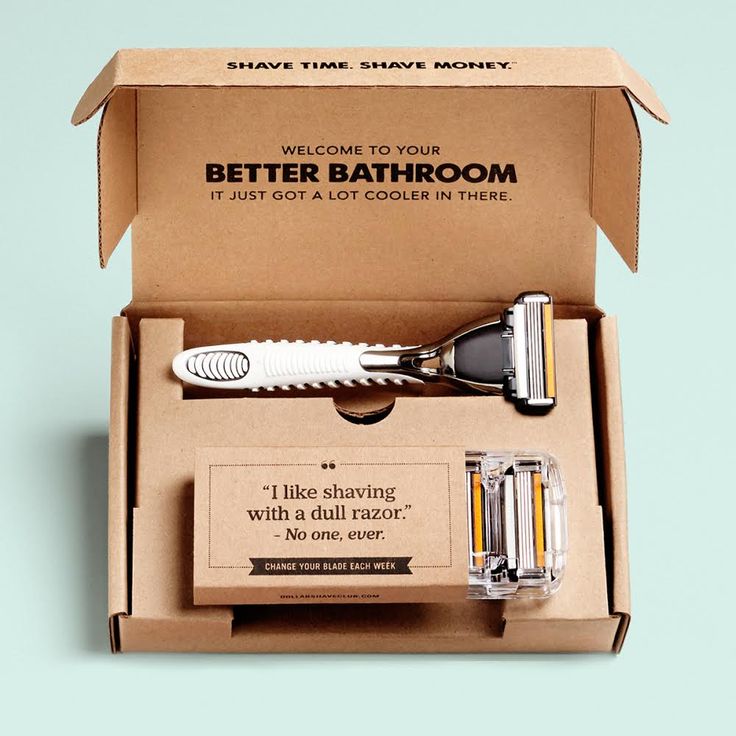
On its website, Dollar Shave Club’s promotional video asks us “do your razors need a vibrating handle, a flashlight, a back scratcher and 10 blades?” It pitches simplicity: “Save time. Shave money.”
By the time consumers come in contact with Dollar Shave Club’s box, they’ve already exercised their purchasing power. They’ve made the decision to disregard all bells and whistles and opt for a reliable, affordable shave. What’s more, Dollar Shave Club needn’t waste precious packaging space communicating what’s inside the box. If the consumer ordered 10 blades, 10 blades are what he or she receives.
Whereas physical retail demands a constant vying for attention, ecommerce’s primary packaging principle is to elevate that which the consumer has already made a decision about.
More accessible than ever
The beauty of today’s branded packaging design is that the production process is getting easier for smaller and medium-sized eCommerce businesses. Companies such as our own provide these businesses with tools to upload designs and play around with virtual boxes before printing.
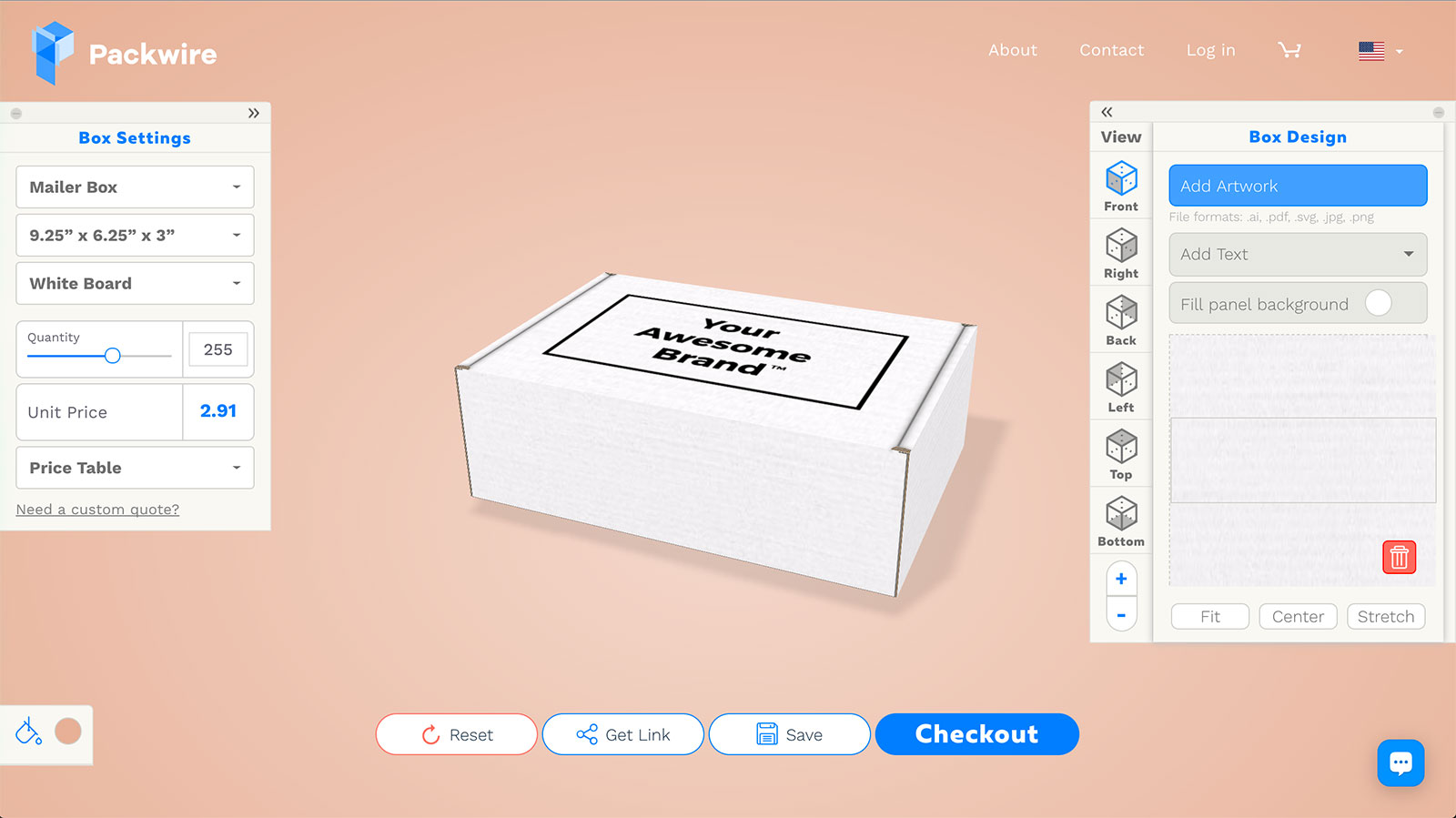
Even better, businesses that are just launching no longer need to worry about ordering humongous quantities. Recognizing the growing number of startups diving into the market, we’ve begun fulfilling orders of as little as 10 units. This cuts the cost for small businesses during their developmental phase, allowing them to order rigid boxes in small quantities and asses from there. This means if there’s the possibility of rebranding after launch (we’re currently working on an article about this very thing; stay tuned!) or if you’re in a niche market with a modest client base, you needn’t fret about breaking the bank.
Of course, there’s a whole lot to consider when designing and branding your packaging (we covered a few of the basic principles here). But rather than delve into the nitty-gritty technical specs, we’ll conclude by posing one simple question: How does your product make your customer’s life different?
It’s this difference that defines your brand’s identity. It should serve as the compass that guides every element of your packaging design. After all, without this difference, your designer brand won’t amount to much more than just another pair of socks.